
 Feedback

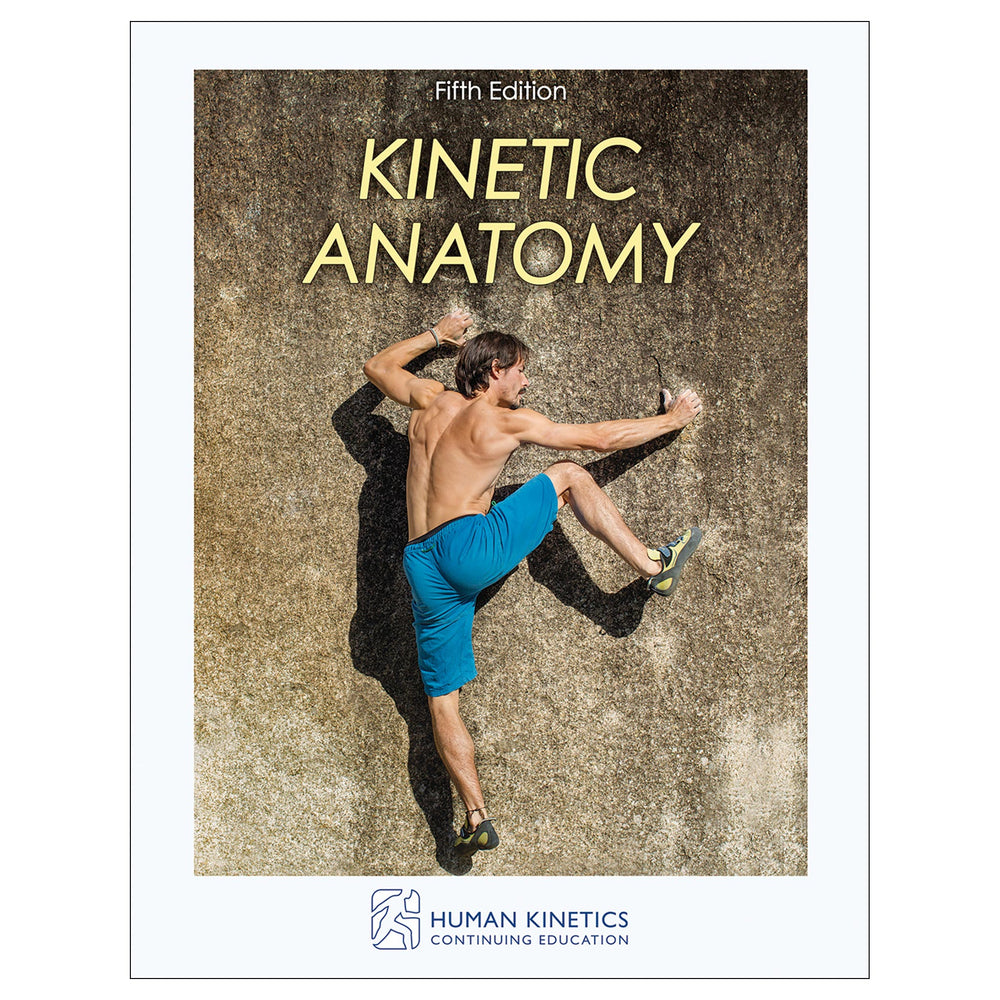
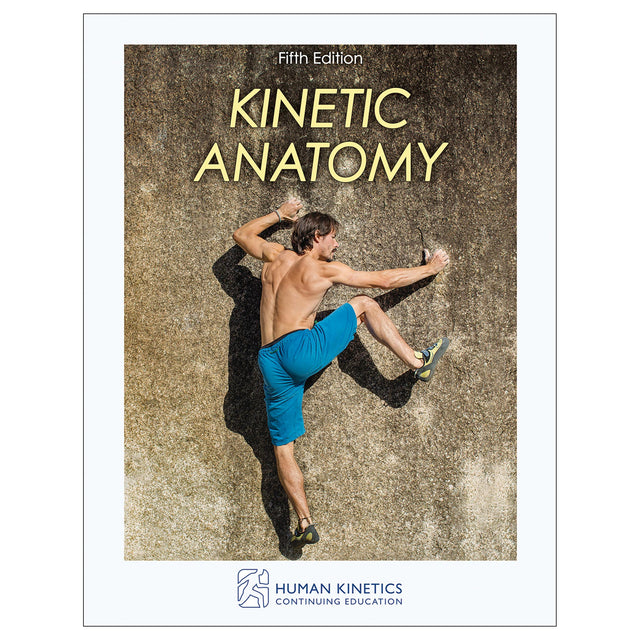
Kinetic Anatomy 5th Edition Online CE Exam With Ebook
Author: Human Kinetics
$142.00 USD
Human Kinetics strongly recommends that you complete your exam within the calendar year of your date of purchase to ensure approved credits do not expire for your organization.
This package includes the following:
- Kinetic Anatomy, Fifth Edition, ebook
- Online continuing education exam
The human body is a complex machine with many parts working together to facilitate movement. Kinetic Anatomy, Fifth Edition With HKPropel Access, introduces readers to musculoskeletal anatomy by systematically assembling each component of the human body. Layer by layer, readers will study bones, ligaments, joints, and muscles as well as the nerves and blood vessels that supply these muscles that are essential for movement.
Over 300 full-color illustrations, photos, and infographics help to visualize and apply structural anatomy concepts to real life. Written with the goal of making human anatomy accessible, Kinetic Anatomy, Fifth Edition, has a variety of tools to aid in understanding and application, including the following:
- Hands On exercises instruct readers to physically identify anatomical structures on themselves or on a partner
- Focus On sidebars illustrate circumstances in everyday activity that relate to the specific anatomical structures in the text
- Pop Quiz sidebars provide readers an opportunity to strengthen their clinical reasoning skills by asking them to identify the muscles shown in the accompanying photo
- A new glossary helps readers learn the terms used throughout the text
Readers of Kinetic Anatomy, Fifth Edition, will learn what structures are involved in movement and how those structures should function, allowing them to identify problems and correct them to enhance physical activity. Anyone interested in how their body functions during physical activity and how overuse or misuse can affect certain anatomical structures will benefit from this ebook.
After reading the ebook, certified professionals can take the companion CE exam to earn continuing education credits.
Learning Objectives
- Identify all the bones of the human body and their anatomical landmarks.
- Describe joints by their forms (diarthrodial and synarthrodial).
- Identify motions associated with synovial joints based on their shape (hinge, ball-and-socket, irregular, condyloid, saddle, pivot).
- Identify the ligaments and tendons that attach the bones and form the major joints of the human body.
- Identify the major muscles of the human body, their position, and their actions.
- Describe the fundamental movements of the human body.
- Identify the planes and axes associated with fundamental movements of the body.
- Identify the major blood vessels and nerves of the human body.
- Identify the structures and functions of the brain.
- Communicate using the universal language of human anatomy.
- Apply muscular anatomy to specific training exercises of the upper and lower body and the core.
Audience
Certified professionals who have an interest in anatomy pertaining to human movement.
Part I. General Concepts of Anatomy
Chapter 1. Structures
Chapter 2. Movement
Part II. Upper Extremity
Chapter 3. The Shoulder
Chapter 4. The Elbow and Forearm
Chapter 5. The Wrist and Hand
Chapter 6. Nerves and Blood Vessels of the Upper Extremity
Part II. Summary Tables
Articulations of the Upper Extremity
Muscles, Nerves, and Blood Supply of the Upper Extremity
Part III. The Head, Spinal Column, Thorax, and Pelvis
Chapter 7. The Head
Chapter 8. The Spinal Column and Pelvis
Chapter 9. The Thorax
Chapter 10. Nerves and Blood Vessels of the Head, Spinal Column, Thorax, Heart, and Lungs
Part III. Summary Tables
Articulations of the Head, Spinal Column, Thorax, and Pelvis
Muscles, Nerves, and Blood Supply of the Head, Thorax, and Spinal Column
Part IV. Lower Extremity
Chapter 11. The Hip and Thigh
Chapter 12. The Knee
Chapter 13. The Lower Leg, Ankle, and Foot
Chapter 14. Nerves and Blood Vessels of the Lower Extremity
Part IV. Summary Tables
Articulations of the Lower Extremity
Muscles, Nerves, and Blood Supply of the Lower Extremity
Rachel M. Koldenhoven, PhD, ATC, is an associate professor of athletic training and prerehabilitation sciences in the department of health and human performance at Texas State University. She has taught a variety of anatomy courses since 2015. Her research focuses on biomechanics, rehabilitation, and wearable technology, with an emphasis on understanding movement in individuals with chronic ankle instability and developing strategies to improve gait biomechanics. In 2025, she received the Presidential Distinction Award for Excellence in Service from Texas State University. She was also the recipient of the College Achievement Award for Excellence in Scholarly Activity and the NATA Research and Education Foundation Free Communications Award for Early Career.
Robert S. Behnke, HSD, was retired after 39 years of teaching anatomy, kinesiology, physical education, and athletic training courses at the high school and university levels. Behnke was honored on several occasions for excellence in teaching, including receiving the Caleb Mills Outstanding Teaching Award at Indiana State University and the Educator of the Year Award from the National Athletic Trainers’ Association (NATA). He served 11 years as chair of the NATA Professional Education Committee. In 1990, Behnke was inducted into the NATA Hall of Fame. He was also in the Indiana State University Athletic Hall of Fame, the Illinois Athletic Trainers Association Hall of Fame, and the Indiana Athletic Trainers’ Association Hall of Fame.
Behnke spent most of his career at Indiana State University (1975-1998), where he was a full professor of physical education and athletic training and director of undergraduate and graduate athletic training programs; in retirement, he held the rank of professor emeritus. He served as head athletic trainer and an instructor at Illinois State University from 1966 to 1969. He was head athletic trainer and an assistant professor at the University of Illinois from 1969 to 1975. He was an athletic trainer for boxing, men’s field hockey, team handball, ice skating, roller hockey, gymnastics, judo, and cycling at the U.S. Olympic Training Center in Colorado Springs in 1984 and 1991.
Robert Behnke passed away in 2026.